

SponsorDonate
Act 1

She spent her life saving others. Then she needed saving herself.

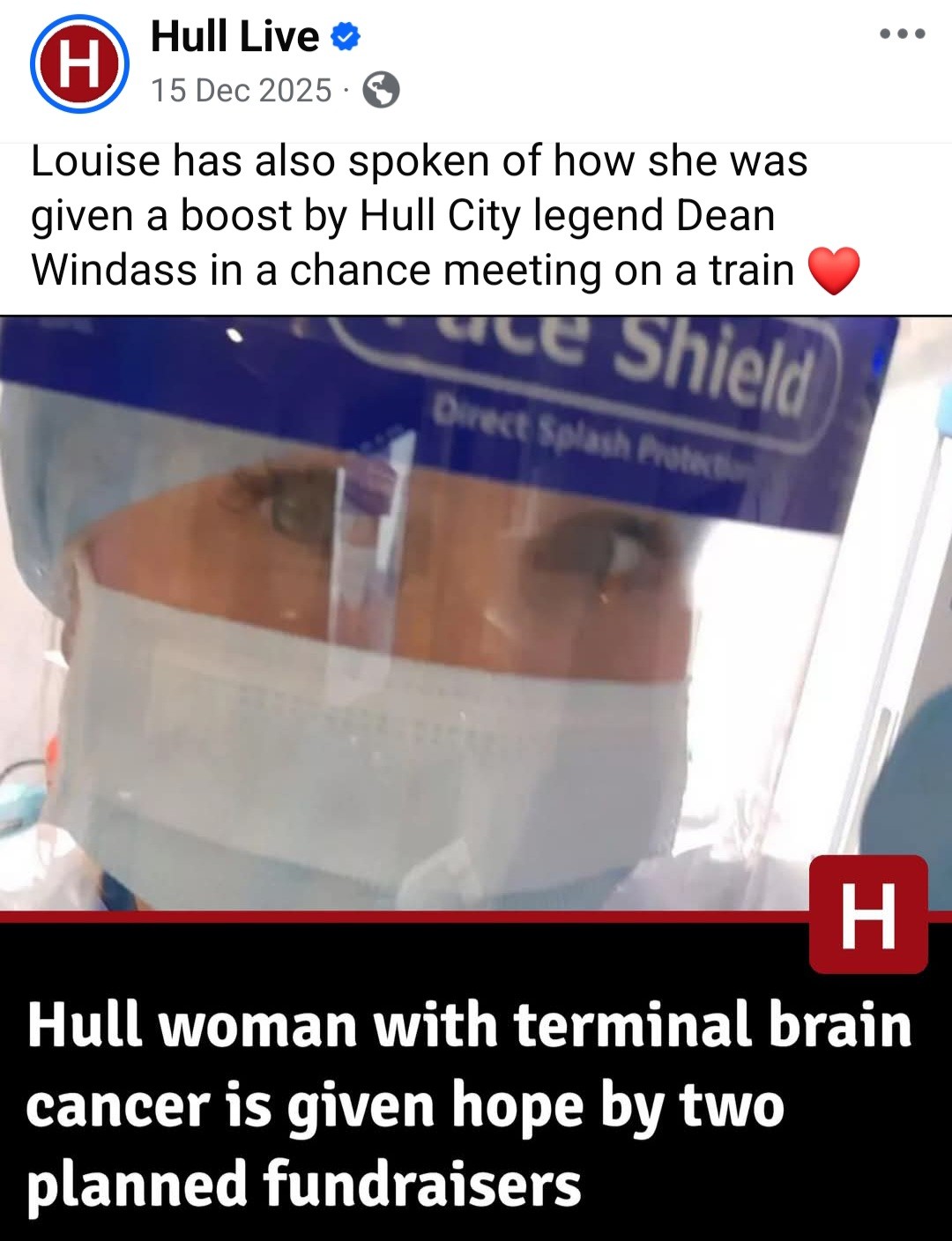
Before Louise became the patient, she was an NHS Operating Department Practitioner — helping other people through frightening clinical moments, including throughout COVID behind PPE and a face shield.

Read full chapter

Before anyone used words like glioblastoma, terminal, incurable or treatment pathway, Louise was simply Louise: working, helping, living, and trying to rebuild her life after years of illness had already taken so much from her.

She worked as an NHS Operating Department Practitioner, part of the surgical world most people never see: the rooms, the preparation, the pressure, the handovers, and the moments when a patient is frightened but the team around them must remain calm.

Throughout COVID, Louise was ever-present, wearing PPE and a face shield and helping others through one of the most frightening periods the NHS has ever faced.

This campaign is not about a statistic. It is about a woman who worked, loved, laughed, looked after others, and deserved the chance to get her life back.
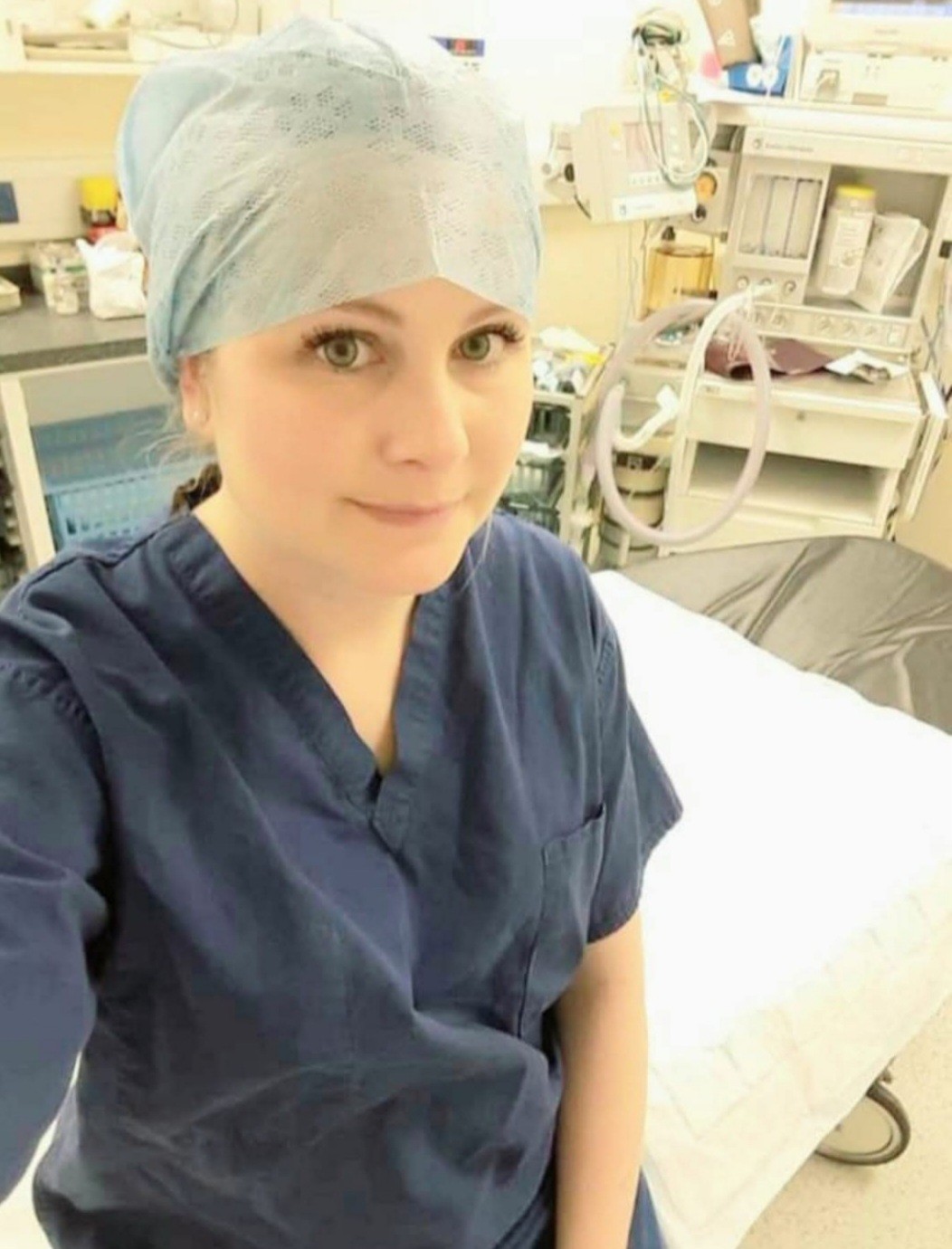
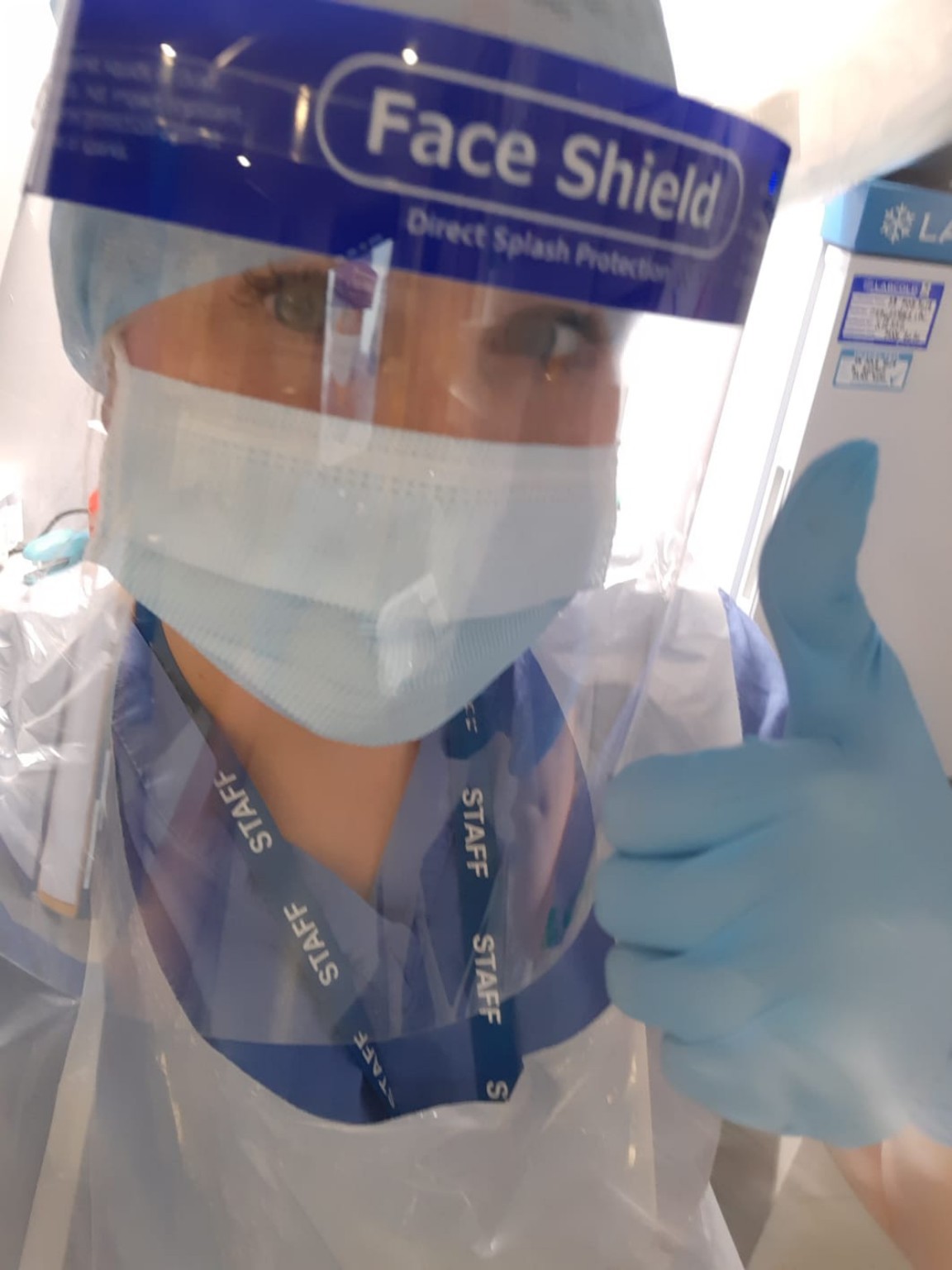
Louise at work as an Operating Department Practitioner
Louise working through COVID in a face shield
Act 2

This was not her first fight.

In 2019, Louise faced an 8.5 cm ovarian cyst and severe endometriosis. Keyhole surgery could not proceed as planned, and surgeons had to perform a major open abdominal operation.

Read full chapter

Long before her brain tumour, Louise had already been forced into frightening medical territory. In 2019, she was diagnosed with an 8.5 cm ovarian cyst after a period of fear and uncertainty, including the possibility that it might be cancer.

Keyhole surgery was planned, but the surgeons discovered that the endometriosis was far more extensive than expected and could not continue as intended. A major laparotomy — open abdominal surgery — was required.

During the operation, several affected areas were removed, including her appendix, omentum and reproductive tissue damaged by the disease. It was major surgery, followed by another difficult recovery, and Louise once again had to fight hard to regain her health.

In 2022, Louise faced another major operation. Her bowel was found to be twisted and severely affected, resulting in a bowel resection. By the time 2025 arrived, she had already endured years of illness, pain and recovery.

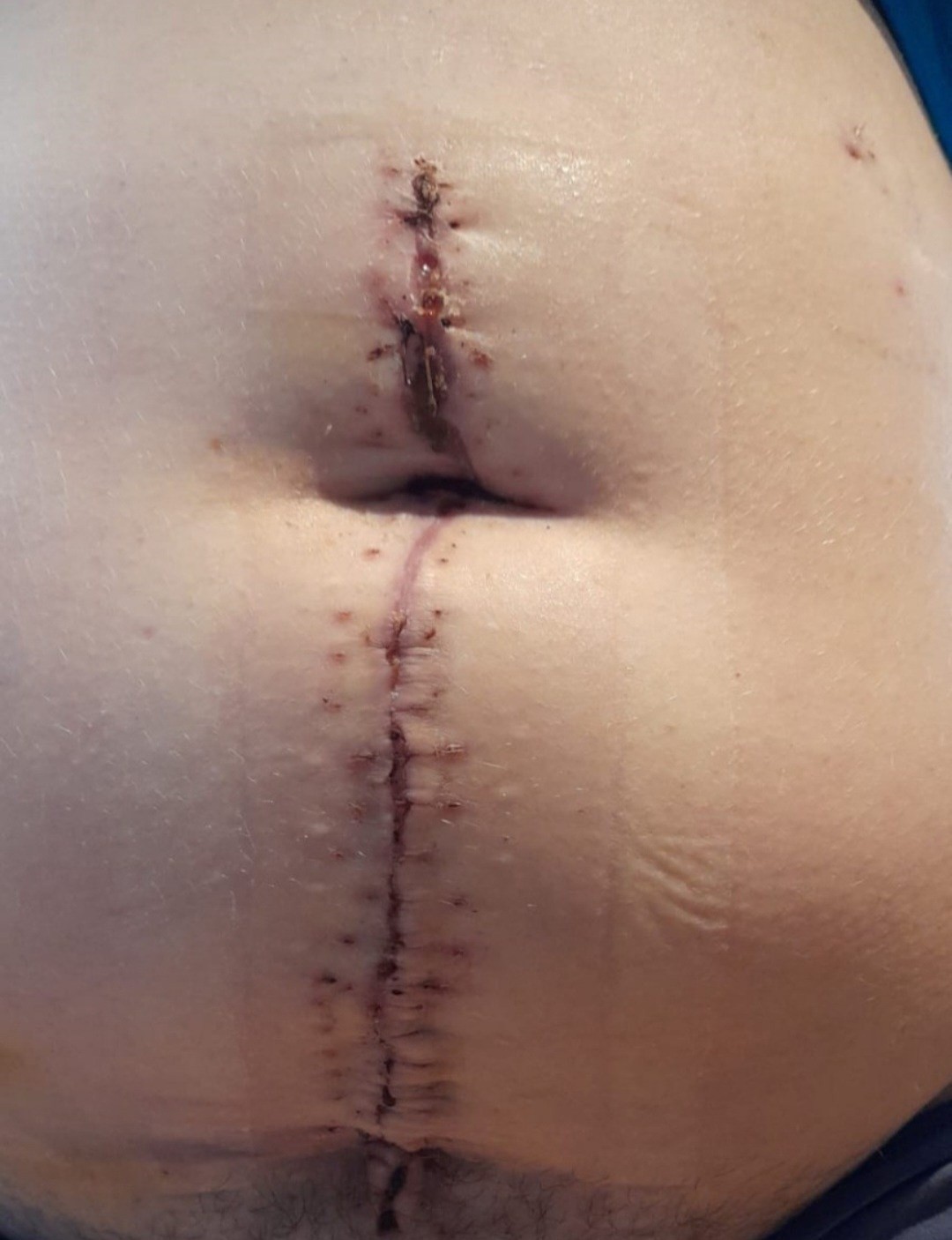
Graphic medical image — click to view
After the 2022 bowel resection
Act 3

Everything was finally going right.

April 2025 brought another blow: endometriosis had returned alongside adenomyosis. Louise refused to give in, taking control where she could and rebuilding her health, strength and confidence.

Read full chapter

In April 2025, an abdominal MRI showed that the endometriosis had returned, alongside adenomyosis. After everything Louise had already been through, it was another cruel blow.

Louise did not collapse into defeat. She did what she had always done: she pushed back. Determined to take control of what she could, she began eating more healthily, returned to the gym and used her bike wherever possible — rebuilding her strength, restoring her confidence and trying to feel like herself again.

For a brief moment, it felt like she might finally be moving forward.

Then, only two months later, the headaches started.

Act 4

One scan changed everything.

Headaches began on only the left side of Louise's head. She knew they were not normal, pushed for answers and received an MRI on 22 July 2025. The scan revealed a large brain tumour.

Read full chapter

Louise's headaches occurred only on the left side of her head. They were not normal and did not feel like something she could ignore. She knew something was wrong and pushed for an MRI.

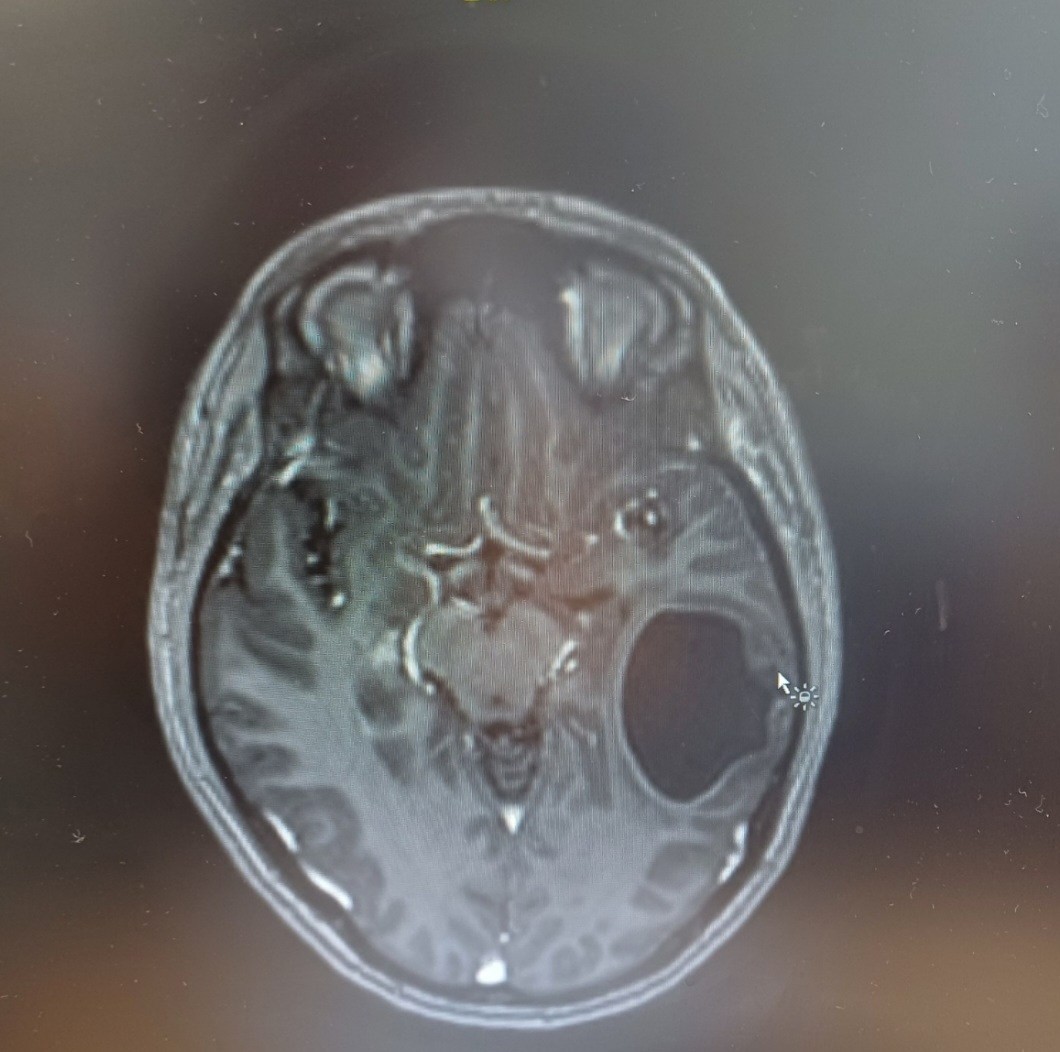
After several weeks of worry, the MRI was carried out on 22 July 2025. That was the moment everything changed: the scan showed a large tumour in Louise's brain.

There are moments where life divides into before and after. Before the scan, there was fear and uncertainty. After the scan, there was the reality of a brain tumour and a world none of us were ready to enter.

The MRI that changed everything
Act 5

Brain surgery became reality.

On 4 August 2025 Louise underwent brain surgery. On 15 August, the diagnosis landed: glioblastoma. The words terminal, incurable and no cure changed everything for the family.

Read full chapter

On 4 August 2025, Louise underwent brain surgery. It is impossible to explain what that kind of day feels like unless you have lived it: the waiting, the fear, the hope, the silence, the desperate need for news.

Louise came through surgery. But the family was still waiting for the full truth.

On 15 August 2025, the devastating diagnosis arrived: glioblastoma, stage 4 brain cancer. The words no cure and terminal did not just describe a disease. They landed in the middle of ordinary lives and changed everything.

This was not the end of the fight. It was the start of a new one.

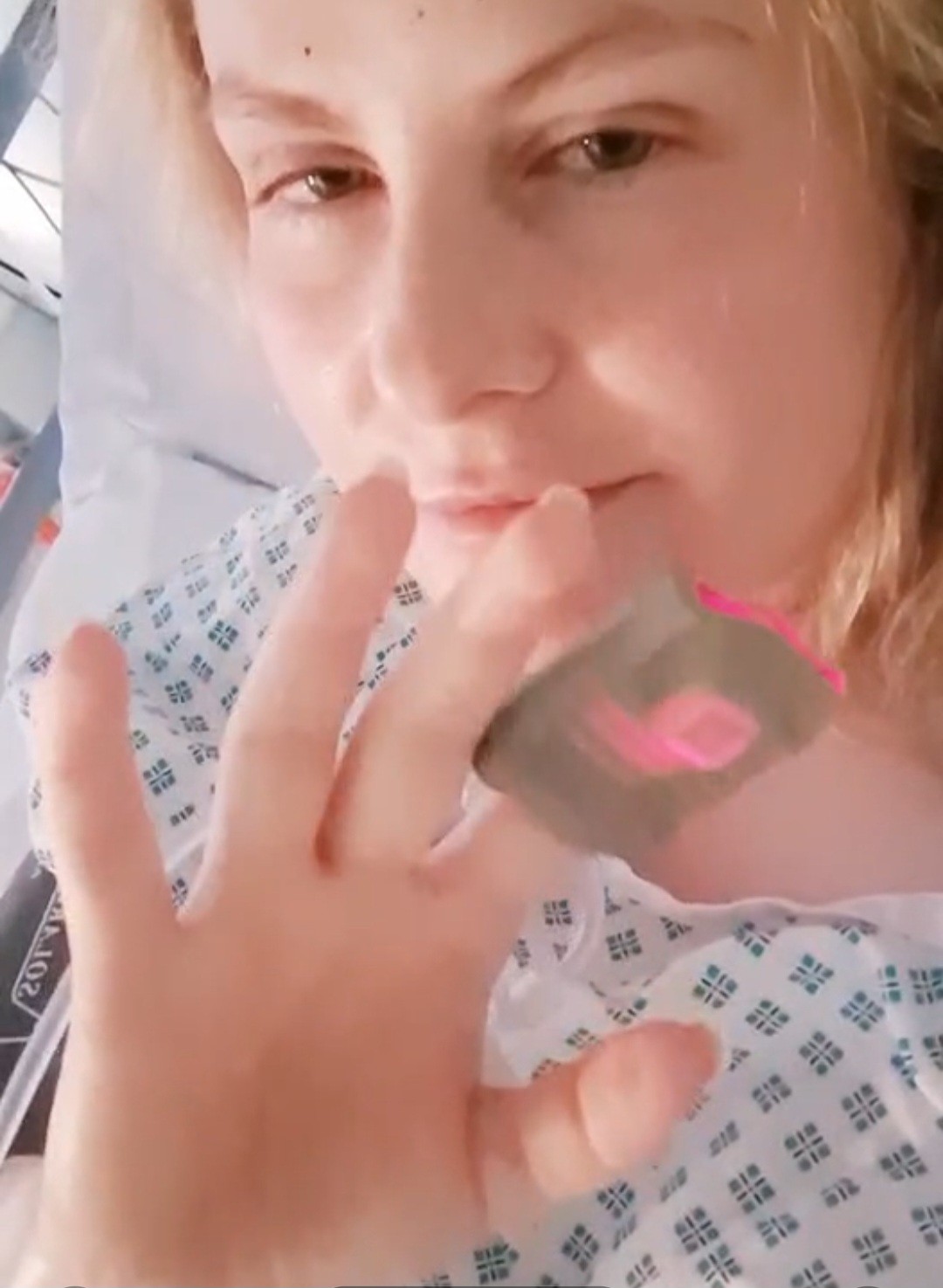
Louise just after brain surgery
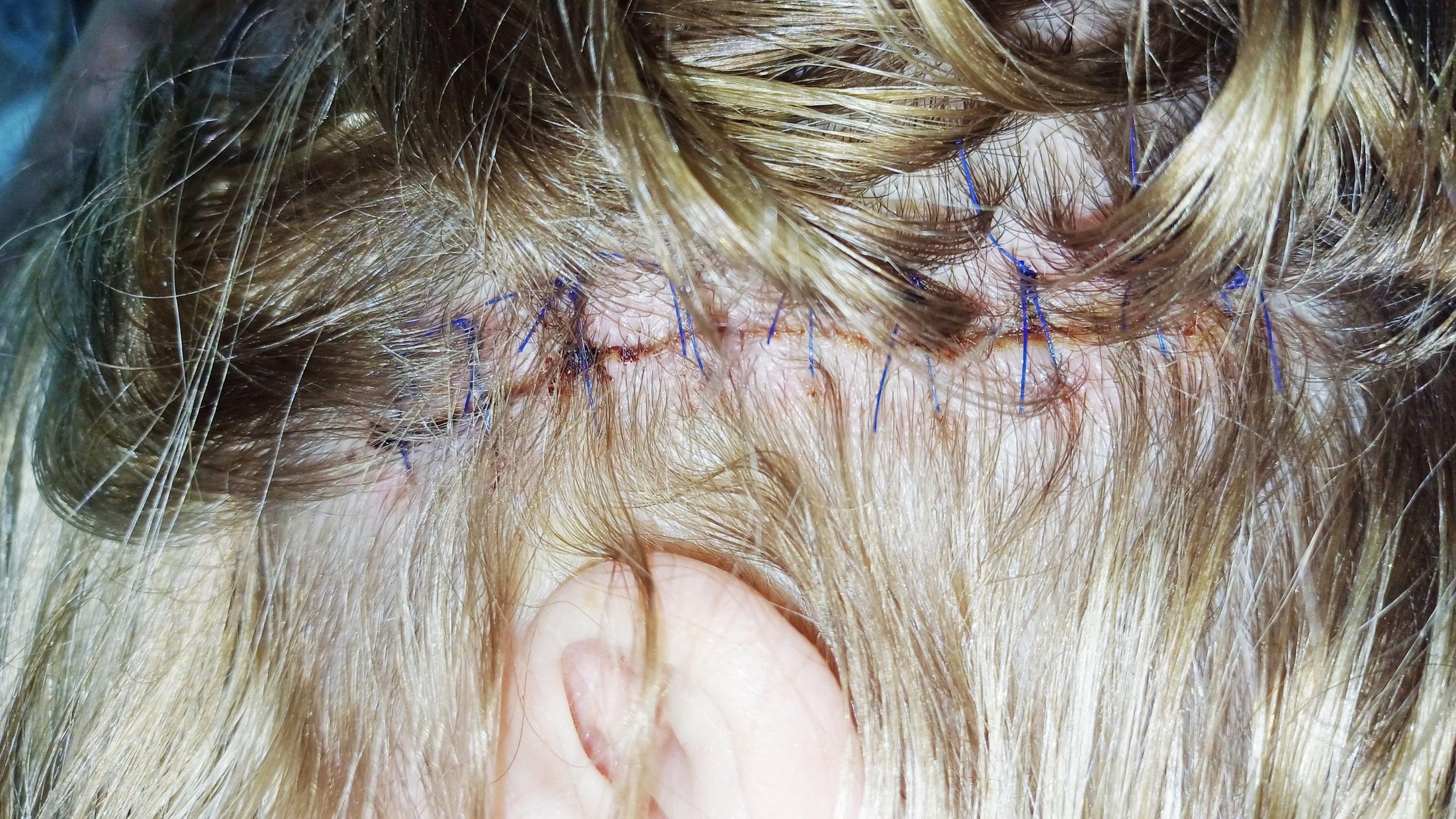
Graphic medical image — click to view
Brain surgery incision
Act 6

We had to act fast.

After diagnosis, the fight became research, timing and decisions. The family had to understand frozen tissue, testing gaps, postcode variation and why waiting could close doors.

Read full chapter

Louise began the standard NHS first-line treatment pathway. Chemoradiotherapy — radiotherapy given alongside chemotherapy — started on 17 September 2025, followed by a break and then maintenance temozolomide (TMZ), the chemotherapy drug routinely used in glioblastoma treatment.

But glioblastoma is not a diagnosis where families can comfortably sit back and wait. It can return at any time. Every month matters. Every MRI matters. Every delay can close a door.

The family quickly discovered that not every hospital has the same systems in place. Louise's hospital did not keep frozen tumour tissue and did not provide the broader genomic testing available in some other centres. Other hospitals in the country can store tissue differently and offer different testing routes. That reality creates a postcode lottery at exactly the moment families most need clarity.

Owain's Law is campaigning to change this. The petition calls for consistent standards so brain tumour tissue is stored correctly and patients are not denied opportunities for advanced testing, research or personalised treatment because of where their surgery took place. Read and support the Owain's Law petition.

Going beyond the NHS pathway was not about rejecting NHS care. It was about trying to keep Louise ready for every possible opportunity while there was still no visible regrowth and while she was well enough to act.

Act 7

Science, not guesswork.

Hyperthermia was not random. It was chosen because it had a scientific rationale, could be combined with maintenance TMZ, and was delivered under Professor Paul Mulholland, one of the UK's leading neuro-oncologists.

Read full chapter

After surgery and chemoradiotherapy, we had to decide what could be done next while Louise was on maintenance temozolomide.

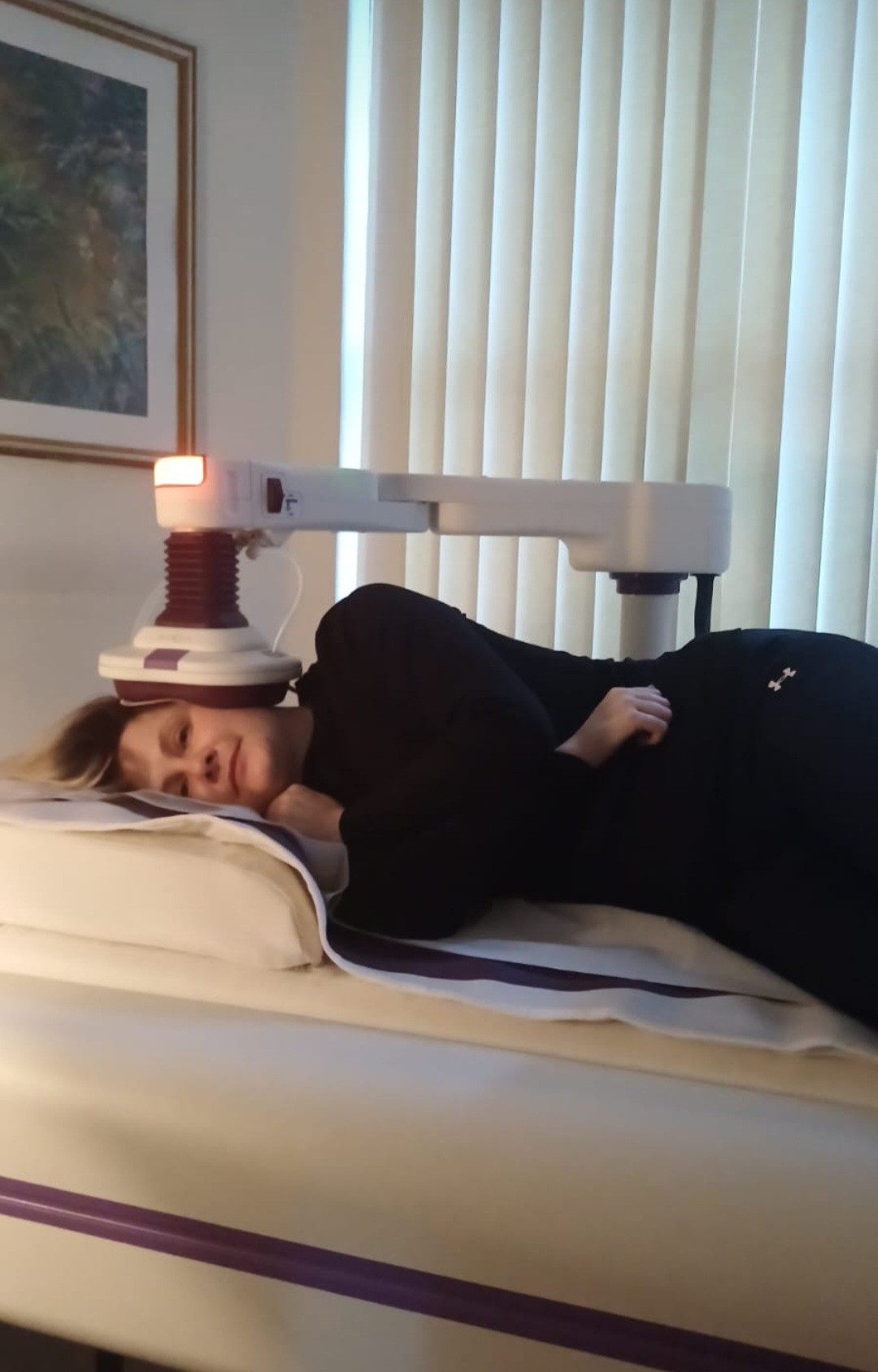
Hyperthermia — treatment using carefully controlled heat with the aim of making tumour cells more vulnerable to chemotherapy — was not chosen because it was easy. It was chosen because it was one of the few options that could realistically be integrated alongside monthly TMZ, had a scientific rationale in glioblastoma and could be delivered under the supervision of Professor Paul Mulholland, one of the UK's leading neuro-oncologists.

That mattered. This was not a random private treatment chosen from fear. It was a reasoned decision based on timing, evidence, expert involvement and Louise's position at that point in the pathway.

It meant travelling backwards and forwards to London every month. It meant treatment sessions, hotels, transport, fatigue and cost. The full hyperthermia phase, with travel, came to around £30,000.

Louise receiving hyperthermia treatment
Official personalised cancer resource Discover how CeGaT analyses tumour mutations and develops individualised vaccine programmes. Visit CeGaT Act 8

CeGaT became hope.

While London treatment was underway, tumour sample was sent to Germany for sequencing and personalised vaccine work. Speed mattered because the aim was to act while there was no visible regrowth or heavy tumour burden.

Read full chapter

Germany was not a holiday. It was not luxury medical tourism. It was what happened when we realised that if Louise was going to access personalised options, we had to move quickly.

Every piece of research pointed toward the same practical reality: with personalised vaccine approaches, timing matters. The best opportunity is likely when there is no visible regrowth and low tumour burden.

So while hyperthermia and maintenance TMZ were happening, tumour sample was sent to Germany for whole-exome sequencing and personalised analysis through CeGaT.

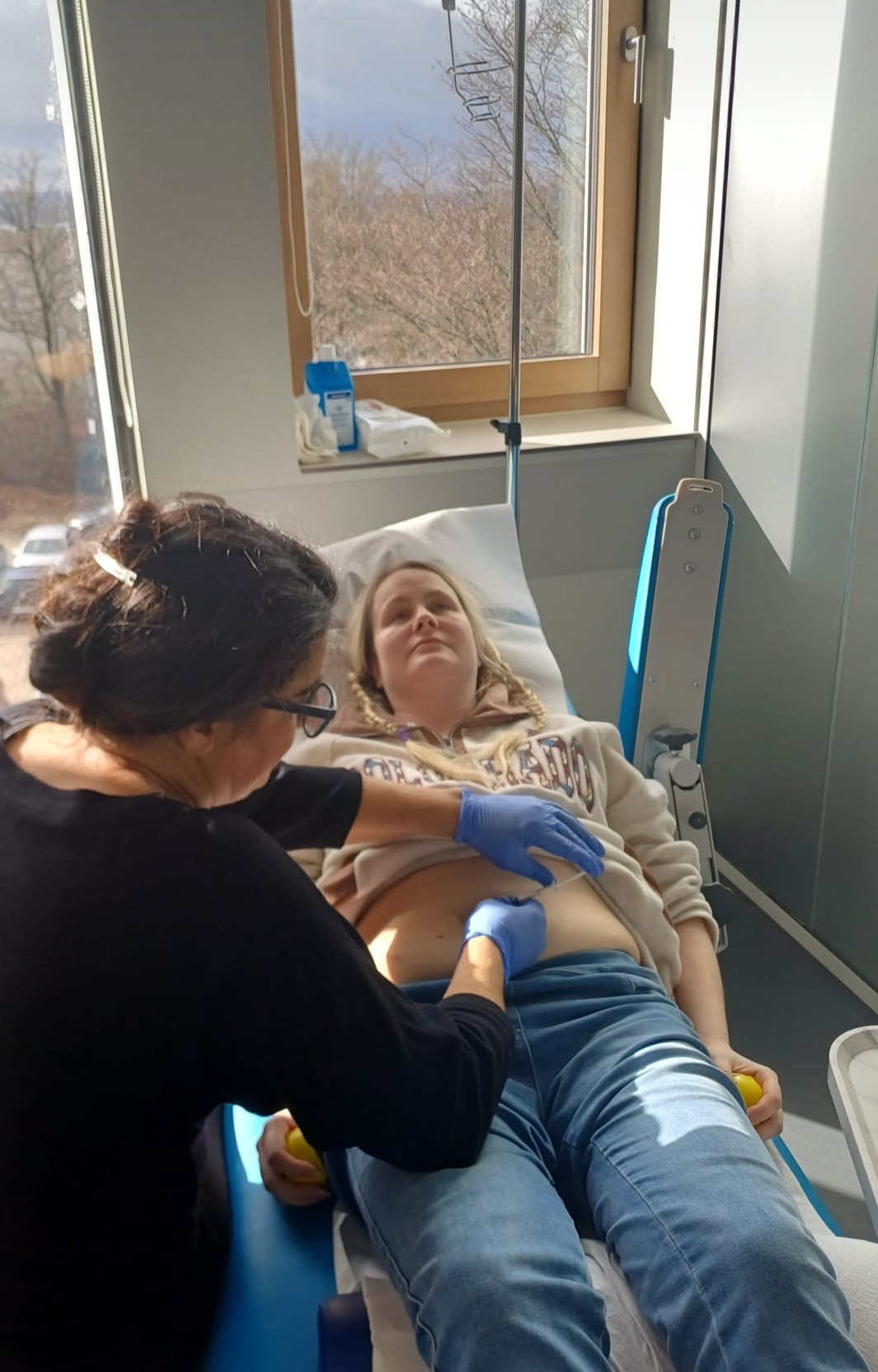
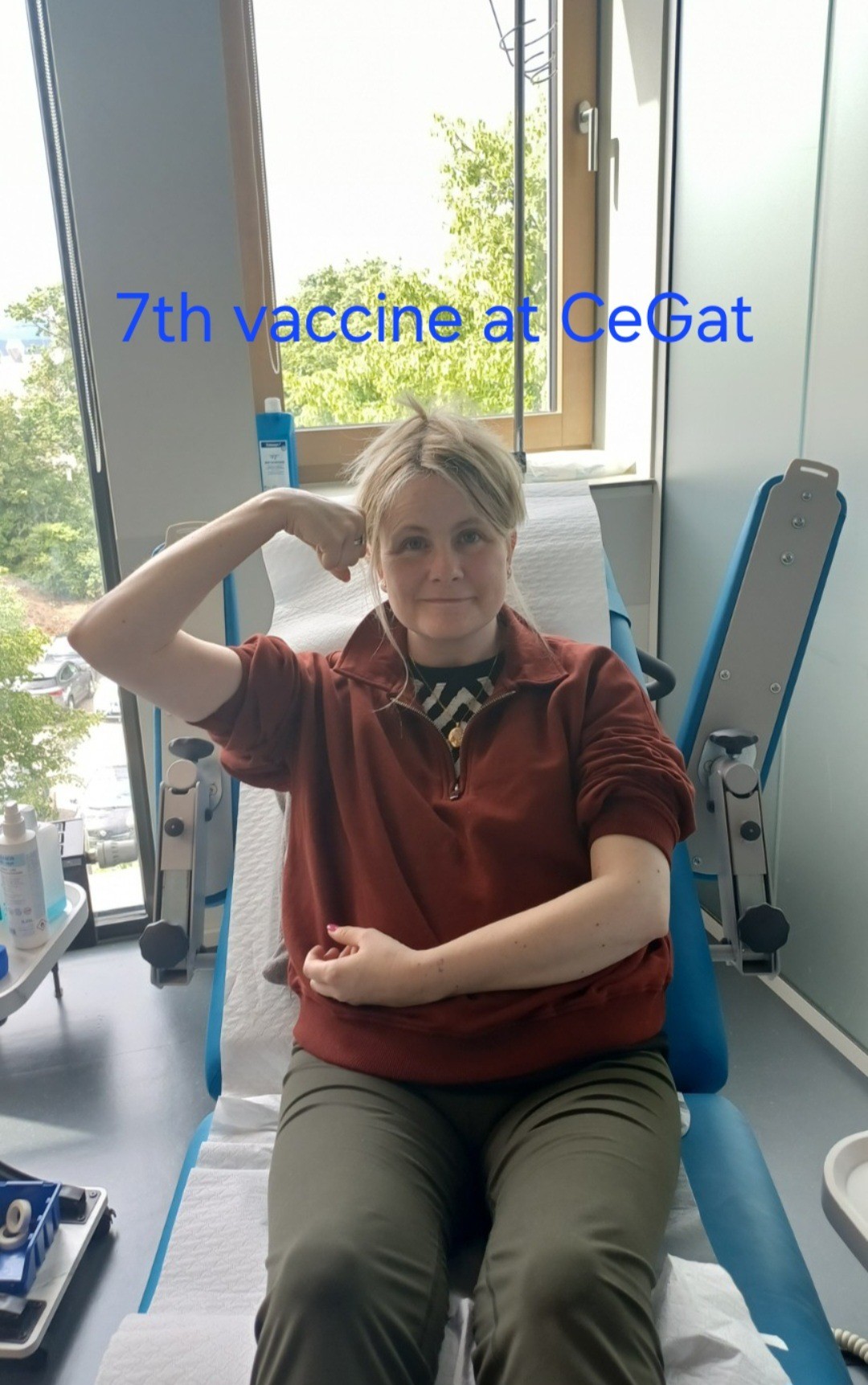
The first trips to Tübingen were exhausting, frightening and hopeful all at once. The first vaccine marked the start of that personalised treatment phase. The seventh vaccine showed how far Louise had already come. Now, on 21 July 2026, she has received her eighth personalised vaccine. This is not a one-stop treatment: it is an evolving journey of repeated travel, monitoring, research and decisions, with Louise still pushing forward at every stage.

A very strong immune response after vaccine seven. After Louise's seventh personalised vaccine, CeGaT carried out a blood test to measure whether her immune system was responding to the vaccine. The result showed a very strong immune response.

Because of that response, CeGaT advised that Louise could move from monthly visits to returning every two months. This does not prove on its own that the vaccine is controlling the tumour, but it is a genuinely encouraging sign that her immune system is recognising and responding strongly to the personalised vaccine.

That makes every donation more meaningful: support is helping Louise continue a treatment programme that is producing a measurable biological response while her MRI monitoring remains clear.

First CeGaT vaccine underway
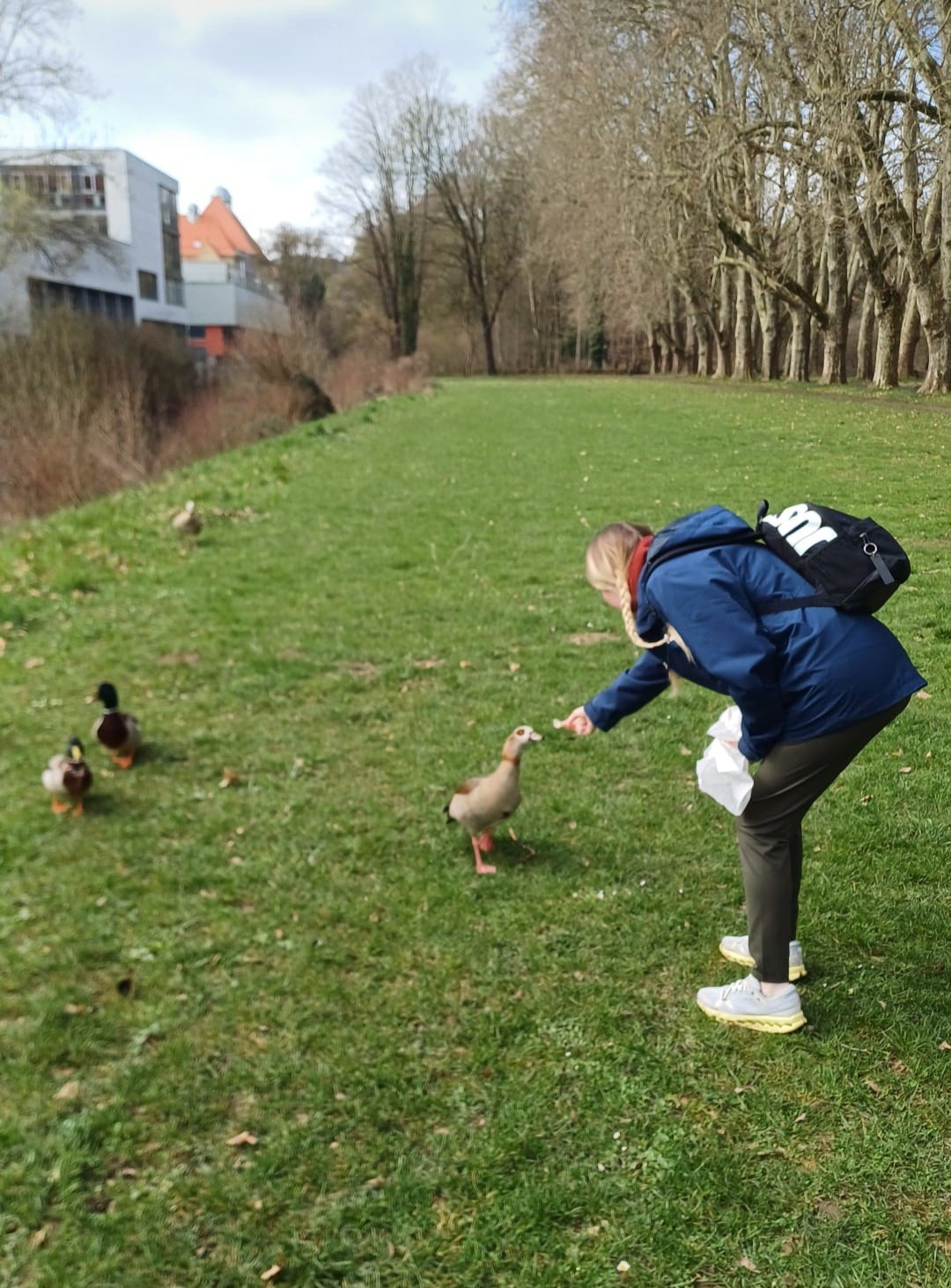
A human moment in Tübingen
Still Louise in the middle of treatment
Seventh CeGaT vaccine after four visits to Tübingen
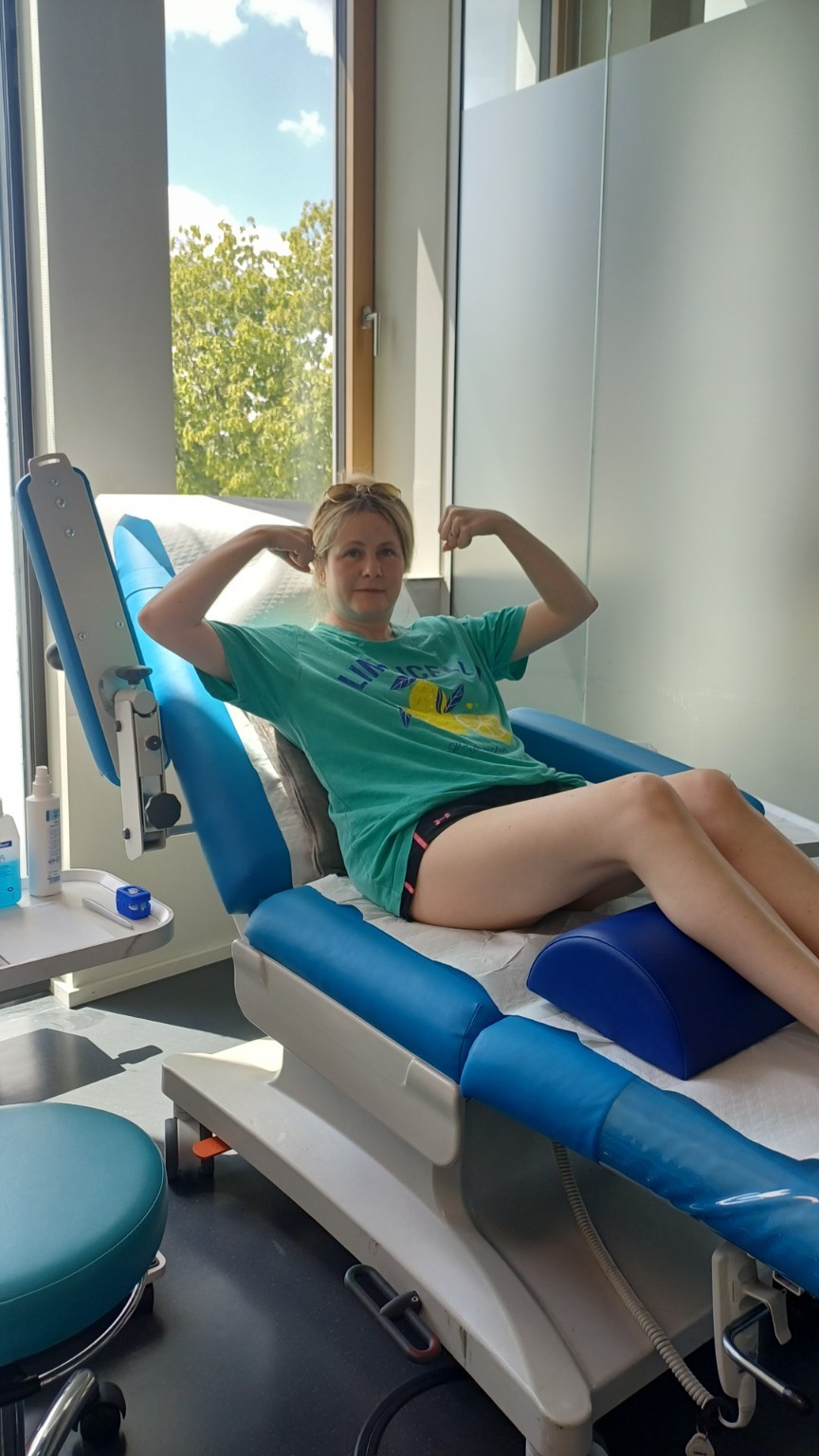
Louise receiving her eighth personalised vaccine in Tübingen on 21 July 2026
Eighth personalised vaccine — Tübingen, 21 July 2026
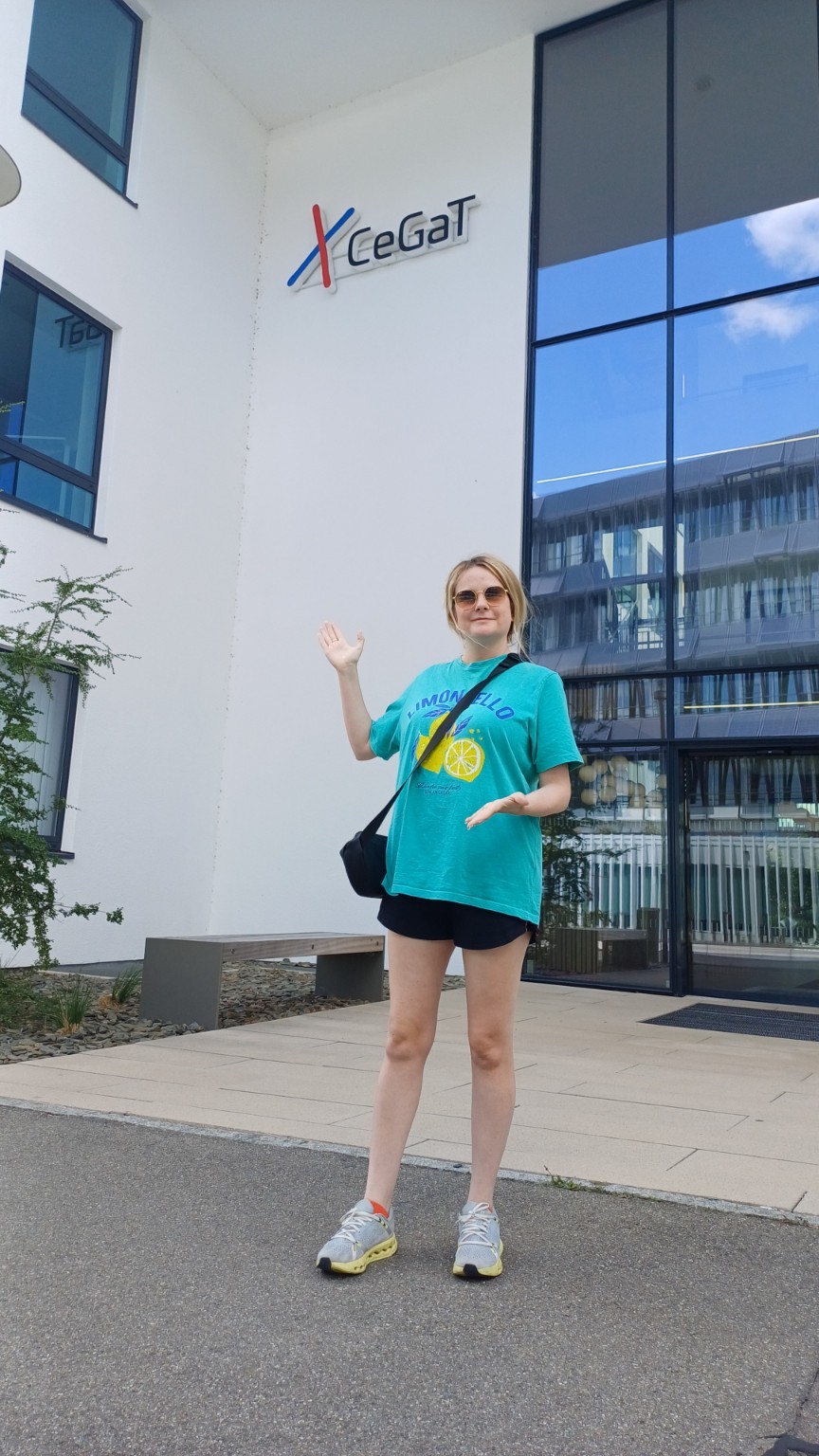
Louise outside CeGaT after her eighth personalised vaccine
Still moving forward after vaccine eight
Act 9

The space between hope and fear.

Glioblastoma means every scan becomes a waiting game. Every two months can change everything, and the family needs to be ready to act fast if the next MRI changes the picture.

Read full chapter

This is the emotional reality that is hardest to explain from the outside.

Life becomes measured in scans. Every two months, everything tightens again. You wait for the MRI. You wait for the report. You wait for the phone call. You try to live normally while knowing one sentence could change every plan.

Relief is temporary. Fear returns. Then the cycle starts again.

That is why the campaign cannot simply stop because one stage of treatment has been completed. With glioblastoma, the fight is not one event. It is ongoing readiness.

If the next MRI changes, we need to be able to pounce. Not research for months. Not wait for a funding target to crawl forward. Not lose time to hesitation. We need to be ready to act when the opportunity appears.

Act 10

The price of hope.

This is where the CeGaT hope chapter connects to the reality of glioblastoma: hope can come with a price tag no family should have to face alone.

Read the cost reality

No family should have to make life-changing decisions through the lens of money. But this is the reality families face when standard pathways are limited and promising options sit outside routine NHS access.

Hyperthermia with repeated London trips cost around £30,000. CeGaT analysis and sequencing cost around £20,000. The personalised vaccine pathway added roughly £60,000+. Eleven Germany trips will cost approximately £33,000 in travel and hotels by completion of the current vaccine programme. IOZK-type international approaches can be around £100,000. Some mutation-targeted drugs can cost tens of thousands per year, around £82,000 in some cases. DCVax-L has been reported privately at around £250,000.

Those numbers are not included to shock people for effect. They show the real mountain families face.

Act 11

Why the fight continues.

The cost chapter explains why fundraising is needed. This chapter explains why the fight still has to continue: glioblastoma is aggressive, the standard pathway is limited, and readiness matters.

Read the facts and sources

Glioblastoma is a grade 4 brain tumour. Standard first-line treatment is still built around surgery where possible, radiotherapy and temozolomide.

Published GBM figures remain stark: The Brain Tumour Charity lists average survival as 12–18 months and reports that only around 5% of people survive for five years or more; Cancer Research UK gives a similar five-year survival figure for glioblastoma. Source buttons are linked below.

The modern temozolomide-and-radiotherapy backbone comes from the 2005 Stupp trial era. That is why families often say the core pathway has changed painfully little for many years.

Research and access gaps matter. Brain tumour research has historically received a small share of cancer research funding, and some promising approaches are not routinely available through the NHS.

This campaign does not promise a cure. It exists to keep Louise ready for the next possible window of opportunity, especially while MRI monitoring continues.

Public proof

Real sacrifice. Public record.

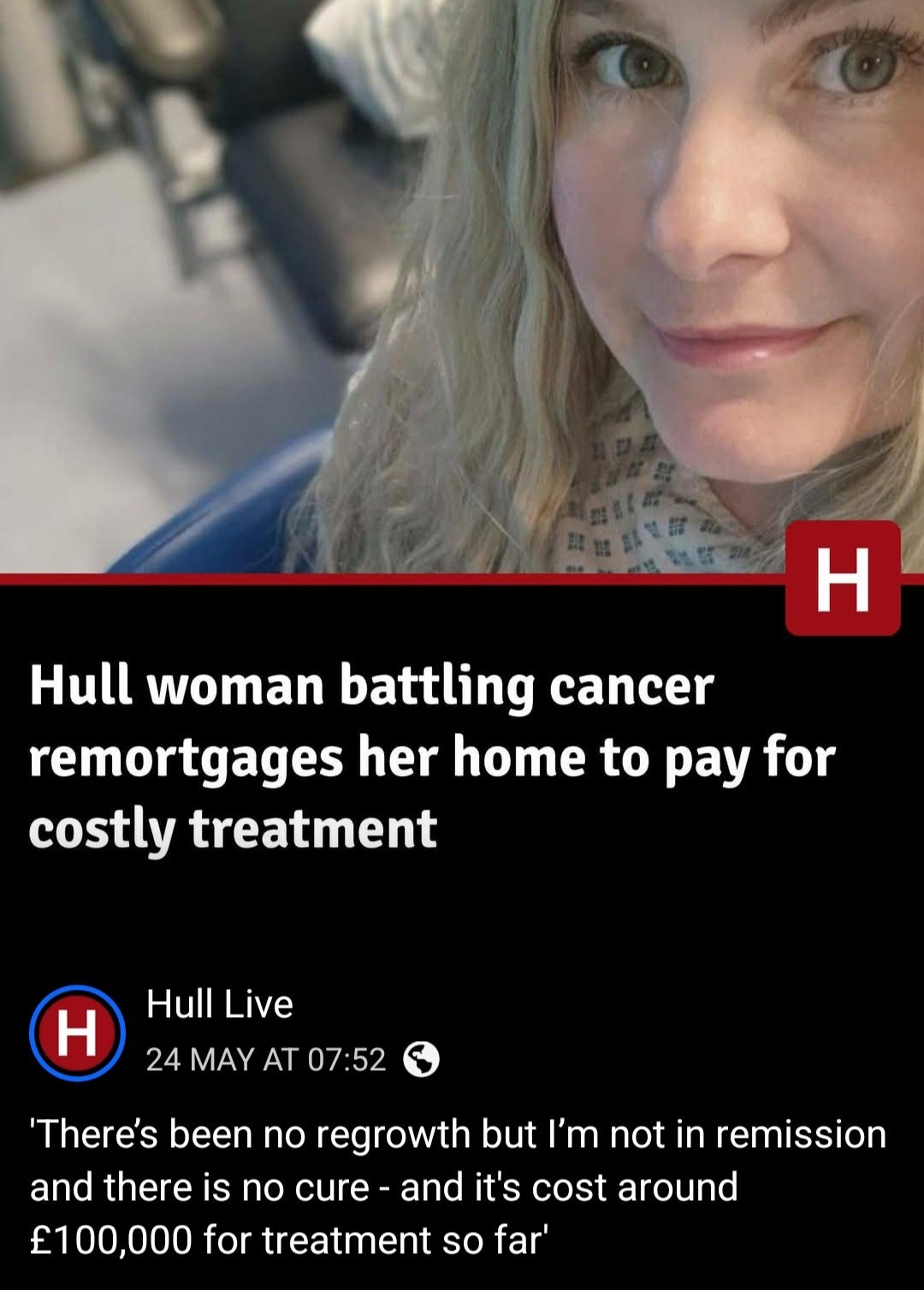
Hull Live has covered Louise's story and the reality of the costs, including the remortgage and the search for hope beyond standard pathways.

Hull Live article about Louise and planned fundraisers
Hull Live coverageLouise's story reported publicly.
Hull Live article about Louise remortgaging her home
Remortgage articlePublic proof of the financial reality.
Verification

Evidence, not hype.

This campaign links to public coverage, official treatment information, medical sources and the verified GoFundMe page so supporters can check what they are reading before donating.

Anti-scam note: Please use only the official buttons and QR code on this website. We will never ask supporters to send money to a personal bank account through comments or private messages.

Medical honesty: This campaign does not promise a cure. It exists to keep options open, fund documented treatment routes and allow fast action if a new opportunity appears.

Louise
Needs You

Surgery completed. Chemoradiotherapy completed. Hyperthermia completed. Eight personalised vaccines delivered. Still MRI to MRI. Still fighting.

8th personalised vaccine delivered — 21 July 2026CeGaT has moved Louise to two-monthly visits following her very strong immune response.
00days00hours00minutes00seconds
Approximate time until the next planned vaccine window
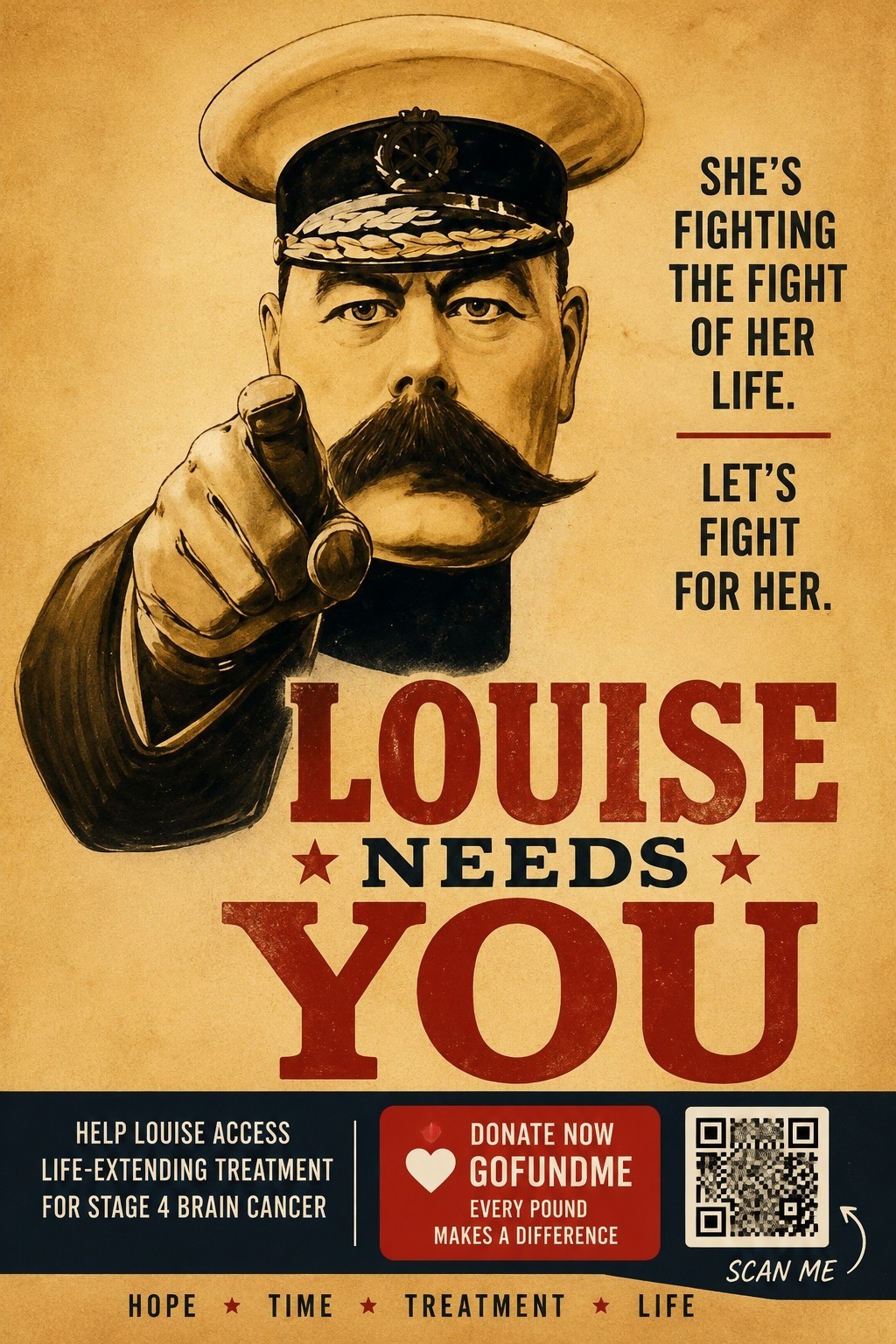
Louise Needs You iconic poster
Help Louise keep fighting — launch GoFundMe
GoFundMe QR codeOpen GoFundMe
Help Louise